

The people holding you back don’t have to do anything wrong. Most of them aren’t doing anything wrong. They like you. You like them. Nobody in the room is sabotaging anybody. And still, every time you mention the plan—the move, the business, the degree—something in the air gets heavier. So you’ve learned to shrink the plan before you say it out loud. That’s not malice. It’s gravity. And gravity doesn’t need a motive.
A room can love you and still pull you back toward the version of you it understands.
Social Gravity is the pull exerted by the people, feeds, rooms, and routines you live inside—the force that makes certain choices feel normal and others feel expensive before you’ve even priced them. You don’t choose your first social field. You inherit it. It comes with the zip code, the family, the industry, the first job that teaches you what ambition is allowed to sound like—and with the people who were already in the room before you knew you were allowed to leave it. That’s not a moral claim; it’s a physics claim. Every orbit has a default speed, every group has an implied ceiling, and every room shares a sense of what counts as realistic. Stay long enough and your private standard starts bending toward the room’s public average.
Most people don’t fail because they lack ambition—they fail because their ambition keeps trying to grow in a room built to make it feel impolite. That’s why no framework built only on the individual can hold. You’re not just becoming yourself—you’re becoming yourself in relation to the pull around you.
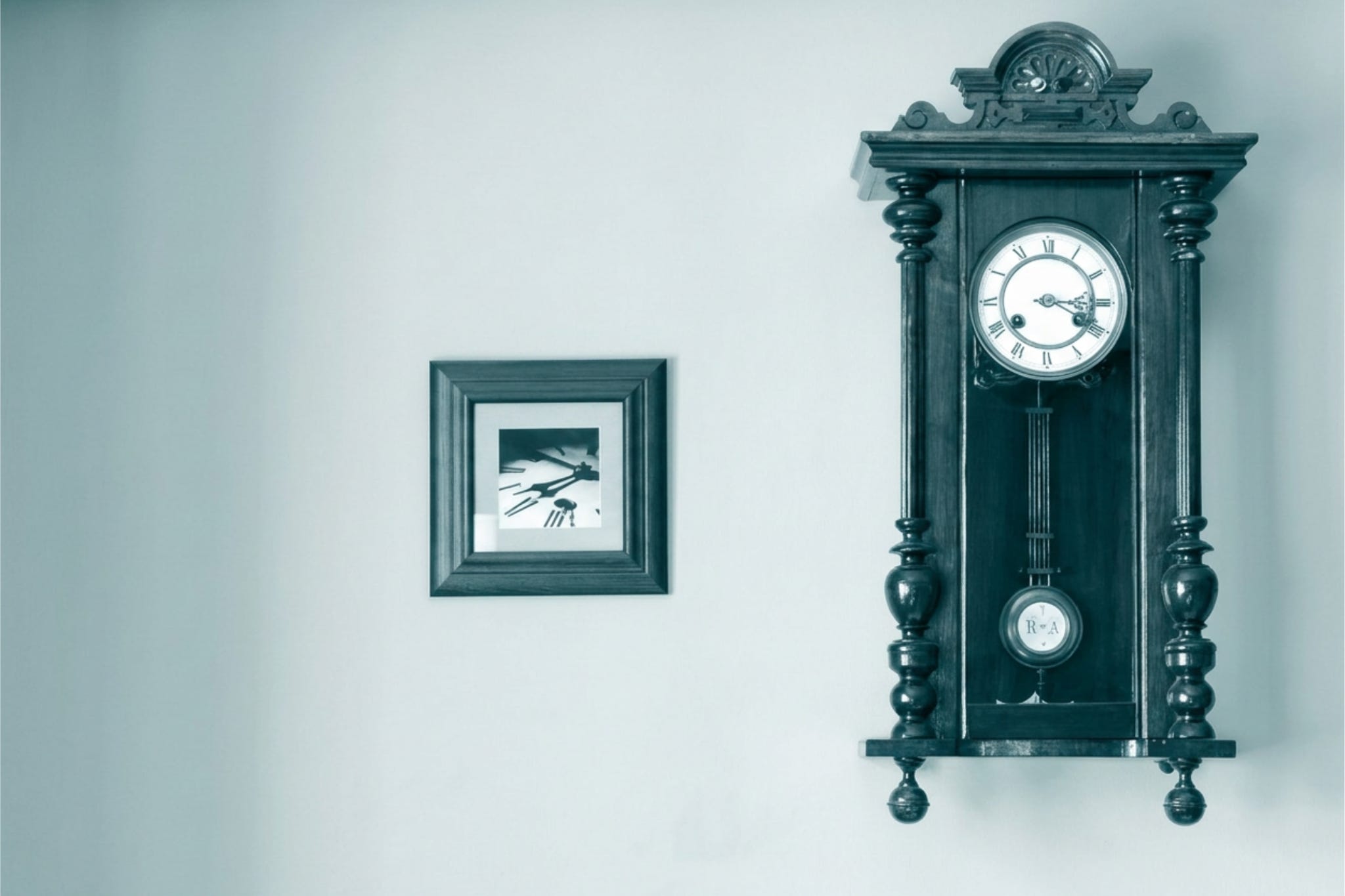
The mechanism is older than self-help. In 1665, the physicist Christiaan Huygens, sick in bed, watched two pendulum clocks on the same wall fall into rhythm no matter how he started them—two separate clocks, one shared beam. He called it a kind of sympathy; today we call it entrainment: systems in contact tend to synchronize.
Human bodies do the same thing. Sit with someone calm and your shoulders drop, your breath slows, your voice settles—the body gets the memo before the mind does. Sit with someone frantic and you leave carrying an urgency that wasn’t yours when you walked in. Mirror neurons run the simulation: another person’s posture and tone become data your system uses to read the room. The body isn’t sealed—it leaks and receives. That’s why “just ignore them” is bad engineering: you don’t ignore a field, you adapt to it.
For proof you already own, listen to your accent. Live somewhere long enough and your mouth starts changing—nobody decides to borrow the vowel shape of a place. A word comes out different, then another, until someone from back home says you sound different. Your body learned the room. Now apply that same drift to ambition, discipline, risk, and follow-through. Apply it to the feeds you check every day, because a feed is a room you carry in your pocket.
For the Spiky mind, all of this runs hotter. The same high-bandwidth processing that makes you brilliant in a spike makes you porous to the room: you read the shift before anyone names it, you notice the little pause after you say what you want. That’s an asset—and it means the wrong room gets in deep. A cynical room doesn’t just disagree with you; it changes the emotional weather around your plan. Then you call it procrastination, or inconsistency, or a lack of grit. Sometimes your system is just doing what systems do: syncing to the wall it’s mounted on. That doesn’t make you weak. It makes the choice of wall consequential.
I’ve started over many times: Mexico to the United States, college, grad school, work, more grad school, and finally back home. Every stage came with a new social field I had to build from zero, and I couldn’t have done it alone. In every stage there was at least one good friend, and I was never shy about asking people I admired for advice—a habit that saved me more than talent did.
Every new orbit held both kinds of people. Some supported me before I had proof, and some made the next step feel normal—which might be the greatest gift one person can give another. Others went out of their way to make me feel small. I don’t need to make them villains; each had their own reasons. Some were protecting themselves, and some saw their own stalled path in mine and didn’t like the mirror. The insight that freed me: whatever people see of themselves reflected in you, positive or negative, is projection. It’s the orbit talking, not a verdict on you. There are billions of people on this earth, and we have too little time on it to waste orbiting negative energy.
So I let go of a lot of orbits—no speeches, no public exits. I just stopped living under their weather. I left social media except when I have something worth saying, and I stopped feeding rooms that made me smaller and then wondering why I felt small. The old line is true enough—those who mind don’t matter, and those who matter don’t mind—but it’s too clean. Real life has grief in it. Some people mattered and still couldn’t come with you; some rooms were loving and still too small; some exits were right and still sad. That’s the price of choosing your orbit.
This is where the Cabinet earns its place—not as another theory, as a tool. A Cabinet is the deliberate set of people whose pull you choose to be subject to. It doesn’t need to be large or impressive—it needs to be honest, and it has five seats.
The Translator renders what you see into language other people can receive—not diluting the idea, making it legible. The Operator loves the details that drain you—the timeline, the follow-up—and turns your strategy into logistics. The Challenger asks the question aimed at the weak joint in the structure—not to win, but to catch the part of you moving too fast to check its own math. The Anchor returns you to the long game when the daily crisis gets loud.
The Witness is the seat standard advice misses, and the one that matters most during a trough. The Witness has seen your spikes and your troughs and doesn’t lose trust when output drops. Without one, the trough gets twice as expensive, because now you’re managing everyone else’s anxiety about your dip. That burns the exact fuel you needed for recovery. A real Witness holds the line instead of turning your low state into a referendum on your character—they’ve never confused a trough with the end of the story.
My own Cabinet isn’t theoretical. A Translator matters to me because social situations that feel like common sense to others aren’t automatic for me; I’ve needed someone who could tell me what the room heard, not just what I meant. My Challengers were never appointed—they were friends whose questions stung at the time and later turned out to be the correction I needed. My Anchor has been family, plus a few people who inspired me by example rather than slogans. And my Witness is my wife. That seat isn’t about applause—it’s about continuity: someone who sees the whole pattern and doesn’t panic when one part of it goes quiet.
Here’s the part people miss: the seats don’t have to be filled only by people you can call. An author can hold a seat for a season, a community can hold one, and so can a sponsor in a support group—support groups exist for nearly everything. Someone living and reachable is better, but never let the lack of perfect people keep the seats empty. An empty seat should stay visible—not papered over with fake self-sufficiency—because it tells you exactly what to build next.
Try this in one day. In the morning, run the Orbit Audit: write down the five people you actually spend the most time with—not the five you admire, the five your calendar names. Feeds count. Next to each name, draw one arrow: up, flat, or down. The down arrows aren’t enemies—they’re gravity.
At midday, draw the five seats—Translator, Operator, Challenger, Anchor, Witness—and put one nomination next to each: a person, an author, a community. Leave empty seats empty—an empty seat is data, not failure.
In the evening, pick the emptiest seat and send one message. Not a coffee request or a mentorship pitch—one specific question to one person you admire. Ask the Challenger type what risk they see in your plan. One question is one small shift in gravity.
The guardrail: nobody gets cut today—no purging, no announcements, no quote about outgrowing people. Gravity responds to distance, not declarations. Reduce the frequency, change the room, and stop offering your most alive plans to people who only know how to make them smaller. You don’t need to hate the old orbit to stop living inside it.
Years inside a deliberate orbit change you in ways that look quiet from the outside. Your standards rise without turning cruel, and your nervous system stops treating ambition like a threat. Your ideas get better because the people handling them know how to challenge, translate, protect, and remember them. The freedom isn’t dramatic. It’s ordinary: you stop shrinking before you speak, and you stop spending your best energy defending the plan’s existence. You start to feel what it’s like to live among people whose pull makes your next self easier to reach.
The Orbit Audit and the five seats come with a worksheet. The Social Architecture module in the Architect’s Field Guide has the audit on paper, the Cabinet laid out seat by seat, and prompts for the one you’d rather leave empty. Free, fillable, and tagged for screen readers — Get the Architect’s Field Guide.
New pieces post weekly — subscribe and the next one finds you.