

October 2025. San Francisco. I was at Dreamforce with a lanyard, a notebook, and years of Salesforce admin work behind me — configuration, workflow-building, the declarative problem-solving that was my trade. Then the Agentforce demos started. Session after session, keynote after keynote, I watched a machine do my work — cleanly, quickly, to applause. Nobody on stage was talking about my job. They didn’t have to. I flew home with a choice most of us are going to face on some stage, in some quarter: panic, or recalibrate.
You’ve either had your version of this moment, or it’s already on the calendar: your industry’s demo, your company’s keynote, the Tuesday afternoon when a feature ships and half of what made you valuable last month starts looking like a button. Maybe it wasn’t a stage at all — a coworker pasting a clean draft into chat after thirty seconds, or a tool finishing a task that used to eat half your day before your coffee cooled.
For the Spiky mind, that moment lands in a strange place. You don’t only fear the machine — you recognize it. It does the thing you always knew was possible if the overhead would get out of the way: it remembers, sorts, drafts, and starts, without losing the thread because the thread was spread across six tabs, three meetings, and one half-remembered Slack exchange.
That stings before it helps, but a better question sits underneath: what if the machine isn’t here to replace your spike — what if it’s here to carry the trough work that’s been stealing your spike all along?
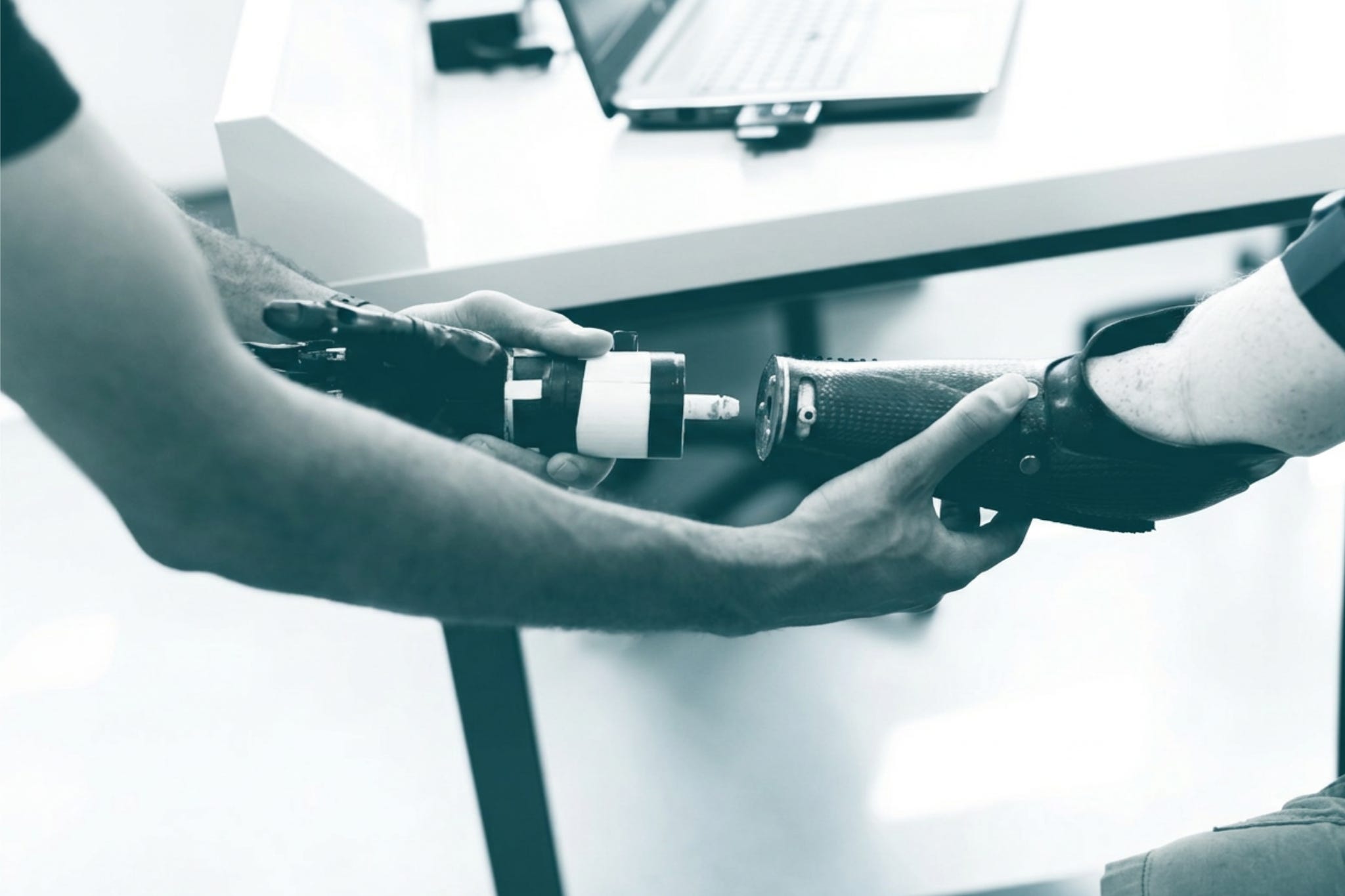
AI isn’t a tool you use; it’s an extension of your cognitive surface area. For the Spiky mind, AI is a prosthetic cortex: an external support layer that carries recall, sorting, assembly, initiation, and tracking so your biological brain can stay focused on synthesis and judgment.
That’s the clean version. You can paste it into Slack.
The prosthesis frame changes the moral story. Nobody calls a runner lazy for using a carbon-fiber blade. The blade bridges intention and reality — it doesn’t remove effort, it changes where effort can go.
That’s the right frame for the burst-pattern brain, because the math isn’t equal. A steady brain uses AI to go a little faster. Helpful, sure — but for the Spiky mind, the gap was never speed. It’s continuity: the spike produces ideas, diagnosis, and judgment at a level most people can’t touch, then the trough asks for filing, sequencing, and status-keeping, and the whole thing stalls. A prosthetic cortex closes that gap, shortening the distance between “I see it” and “I shipped it” — and making it less dependent on perfect internal weather.
After Dreamforce, I didn’t try to become a better version of the same admin. That would’ve been the panic move wearing a disciplined outfit — more configuration, more workflow muscle, more effort inside a shrinking lane.
Instead, I retooled toward Agentforce itself. I moved toward the admin-developer skill set: understanding the business problem, shaping the data, designing the action, and directing the automation instead of standing in its path. The work changed from “I build the thing the machine might automate” to “I help decide what the machine should do, how it should do it, and where a human still needs to judge.”
That distinction saved me from the wrong kind of hustle. A lot of smart people respond to automation by trying to outwork the demo — getting faster at the task that just got cheap, polishing the muscle the market stopped paying a premium for. It feels noble because it hurts. But pain isn’t strategy. The move is to climb one layer up: if the machine can do pieces of your trade, learn to direct it inside the trade — what good looks like, what bad output hides, where the handoff breaks, which parts still need human taste and nerve.
That was the career version. The personal version is more concrete.
For a stretch, my team ran weekly reporting: past week’s accomplishments, milestones for the coming week. On paper, simple. In practice, it asked my brain for exactly what it doesn’t do well — reconstruct a week from memory.
The hard part wasn’t that nothing happened — it was that too much happened. The answer was scattered across email, docs, calendar agendas, Slack threads, and the fog of meetings already replaced by the next meeting. By Friday my brain held the shape of the week but not the inventory. I’d moved things forward — I couldn’t always produce the proof on demand.
That kind of task looks small from the outside. It looks like discipline. Just keep better notes. Just update a tracker. Just spend twenty minutes on Friday. For a Spiky mind, that “just” is where the tax lives. The tax isn’t the report. It’s the reconstruction — opening the mental closet and asking every object to identify itself by name, date, owner, and business value.
So I stopped trying to win that task with more willpower. I built a custom skill for Slackbot — an agentic capability wired into my workspace — and handed it the reconstruction.
The skill told Slackbot what to read: my email, my documents, my calendar and meeting agendas, the meeting transcripts, everything I said in Slack, the files and canvases. From all that, it assembled the week I couldn’t hold in working memory — what got done, what moved, what looked like a milestone for the next report.
I wired my metrics in the same way, so the monthly numbers and the weekly report came from the same place — and I also loaded my performance-review goals into it and tracked progress against them, so review prep came from that data too. The format wanted one thing: your single highest-impact accomplishment of the week. That’s an easy pick when you can see everything. Slackbot ranked my week against those goals and flagged a favorite — but the choosing stayed mine, made from everything I’d done, not whatever my memory volunteered. Review season has the same failure mode at larger scale. The skill didn’t invent the work; it surfaced what I’d already done before my memory misplaced it.
I used it. A few teammates did too.
None of it made me brilliant. It stopped making brilliance pay a clerical toll before it could become visible. My generation side stayed free for real work while the machine held the week steady long enough for me to judge it.
That’s the prosthetic cortex in practice. Not magic or replacement. A specific external layer carrying the specific overhead my internal system drops under load.
The calibration line is simple: offload the overhead, never the spike. Let the machine gather the raw material, sort the mess, make the first draft — the table, the recap, the ugly beginning. But your synthesis stays home. So does your taste, and the judgment that came from your strange mix of experience, pattern recognition, pain, and nerve. Hand those over and you’ve automated away the only part that was ever your edge.
So the question for Monday morning isn’t “How do I use AI?” That’s too broad, and broad questions create broad guilt — the better move is smaller and sharper.
Pick the one task you’ve been avoiding because the activation energy is too high. Not the most important task in your life — the one sitting there with a faint electric charge around it. The weekly report. The email backlog. The plan you keep not starting.
You’ll know it by the flavor. You’re not confused about whether it matters, and it’s not a talent problem — you can picture the finished version clearly enough to feel guilty. The first move is too expensive: it asks you to gather, remember, sort, order, and shape all at once.
That’s the handoff point.
Spend fifteen minutes designing the prompt that gets you a draft. Not the finished thing — the draft. Tell the machine what sources to use, what the output is for, what tone fits, and what “good enough to react to” means. Ask it for something you can disagree with.
Then run it.
The point isn’t whether the first output is good. It’ll probably be clumsy — wrong context, flattened voice. Fine. That’s not failure; that’s the moment the work becomes external. Now you can mark it up, correct the premise, delete the fake confidence, add the sentence only you would’ve written. Saying “no, that’s not the point” is much easier than inventing the point from a blank page.
What you’re testing is the activation-energy wall. You want to feel it drop once — direct evidence that the wall was never capability, only overhead. You weren’t avoiding the report because you had no standards; you were avoiding it because the first thirty minutes demanded the gathering, the sorting, and the starting before the real work even began.
Once you feel that, you know what to hand over next. The overhead. The memory search, the first pass, the status draft, the ugly structure. The things that make you burn spike fuel before the spike even starts.
That’s where the leverage is. Not in becoming someone who never needs support. In building a work surface that stops confusing overhead with character.
The professionals who last in this transition won’t be the ones who out-skill the machine at every task; they’ll be the ones who wire it into their architecture so their biological brain only does what only it can do.
The future doesn’t belong to the brain that does everything alone. It belongs to the brain that knows what not to carry.
This is the last piece before the book. The Spiky Profile: Operating Manual for High-Capability Minds That Stall is out October 2 — the whole architecture this series has been drawing from, including the protocol underneath this piece. Kindle $4.99 for all of 2026, and the pre-order puts it on your device launch morning: Pre-order The Spiky Profile on Kindle.